Levels & Difficulty Tiers

Level Progression in Arrow Tap: Escape Puzzle

Discover how Arrow Tap: Escape Puzzle gradually ramps up from calm introductory boards to layered, mind-bending arrow challenges—without ever losing its relaxed, logical feel.

Levels Overview

How Arrow Tap Curates Its Puzzle Levels

Arrow Tap: Escape Puzzle organizes its stages into distinct difficulty tiers so you always know what kind of challenge you are stepping into—whether you are practicing basic arrow reading or navigating dense, multi-path boards.

Instead of overwhelming you with complex rules from the start, the game eases you in. Early boards use generous open paths and limited directions so you can internalize the core idea: tap arrows in an order that frees the board without trapping remaining pieces.

As you unlock new tiers, boards introduce more arrows, tighter spaces, and layered blocking patterns. Each jump in difficulty feels purposeful, guiding you from quick warm-up puzzles to levels where one mis-timed tap can close off the only viable escape route.

1

Curated tiers instead of chaos

Levels are grouped into broad categories so you can choose between learning the basics or testing your long-form planning.

2

Steady increase in arrow density

Boards progress from sparse layouts to packed grids, increasing the number of potential paths and dead ends to consider.

3

More blocking, more sequencing

Later tiers emphasize blocked arrows and move order, turning each stage into a compact sequencing puzzle.

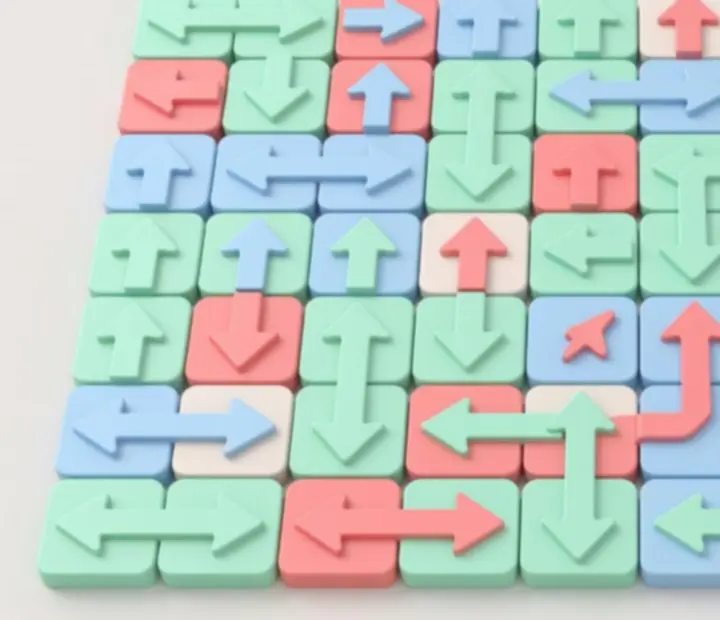
Overview illustration of Arrow Tap: Escape Puzzle boards across multiple difficulty tiers
From open beginner boards to dense, multi-path challenges, the level structure is designed to feel inviting rather than intimidating.

Understanding Difficulty Tiers

From Beginner Boards to Mind-Bending Challenges

Arrow Tap: Escape Puzzle uses four broad difficulty tiers—beginner, intermediate, advanced, and challenging. Each layer adds new patterns to read, more blocked arrows to disentangle, and greater emphasis on planning several taps ahead.

Start here

Beginner Levels

Gentle introductions to directional logic

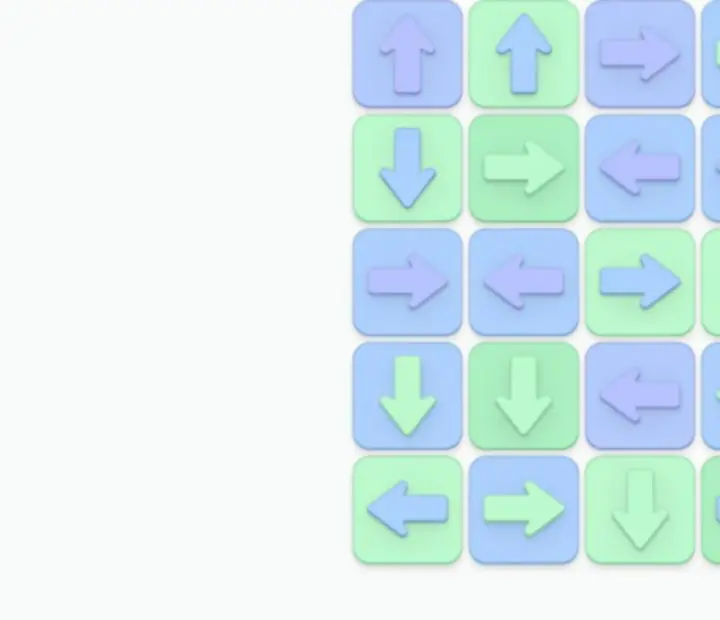
Beginner boards are where Arrow Tap introduces its core mechanic: each arrow points toward the direction it will travel when you tap it. These levels keep the grid relatively open, with fewer arrows, wider gaps, and minimal blocking pieces.

You will mostly practice reading directions, spotting obvious escape paths, and noticing how removing one arrow can open space for the next. Mistakes are forgiving, and solutions usually feel straightforward once you have scanned the board.

  • Low arrow density and clear open paths
  • Few—if any—serious blocking conflicts
  • Designed for relaxed experimentation and learning
Planning required

Intermediate Levels

Introducing blocking arrows and subtle patterns

Intermediate boards make the grid feel more alive. You will see more arrows packed into each row or column, along with blocking pieces that can prevent an arrow from escaping unless you clear something else first.

Patterns emerge: sequences where one arrow frees another, or chains where removing the wrong arrow first collapses an otherwise open route. You will start planning in short multi-step bursts rather than purely tapping what looks obvious.

  • Moderate arrow density and tighter lanes
  • Blocking arrows require short sequence planning
  • Ideal for players comfortable with the basics
Deep logic

Advanced Levels

Where sequencing mistakes really matter

Advanced puzzles lean into cause-and-effect. Arrows crowd together, blocking and unblocking each other as you make progress. A single premature tap can trap several pieces behind an immovable wall, forcing you to rethink your entire approach.

Here, you will be visualizing not just your next move, but the cascade that follows. You will often identify critical “pivot” arrows that must be saved until late in the sequence to keep escape routes open.

  • High arrow density in compact grids
  • Heavier reliance on forward-looking sequences
  • Frequent backtracking and experimentation
Peak challenge

Challenging Levels

Layered blocking and multiple solution paths

Challenging boards represent Arrow Tap at its densest. Grids feel packed, blocking arrows are layered, and viable solutions can branch into several competing plans. You will navigate overlapping sequences where one misjudged move might not be fatal—but it will cost you a clean, elegant solution.

These are the levels that puzzle fans return to, experimenting with alternate tap orders to shave steps and discover more satisfying patterns. Despite the complexity, the one-tap controls and calm pacing keep the experience meditative rather than stressful.

  • Very high arrow density and layered blocking
  • Multiple potential solution routes
  • Designed for patient, strategic players

Visual Level Progression

How Boards Evolve as You Climb Tiers

Even without counting exact level numbers, you can feel the shift from beginner to challenging boards simply by looking at the arrow density, blocked lanes, and amount of free space left on the grid.

Early boards emphasise clarity: spacious layouts, isolated arrows, and single obvious exit paths. As you progress, the same grid template may become more crowded, with arrows stacked in lines that compete for the same corridor.

Blocked arrows become visual anchors—pieces you know you must unlock by clearing a supporting path. Creatively placed obstacles force you to consider diagonally linked chains or zig-zagging sequences instead of simple straight-line clears.

Visually, the transformation feels like zooming in on a map: small, serene cul-de-sacs grow into bustling intersections of potential moves.

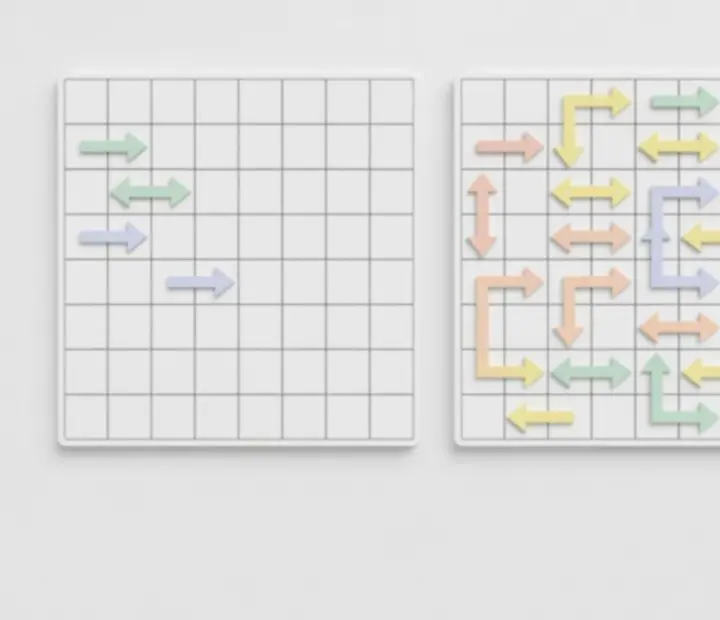
Visual comparison of simple and complex Arrow Tap: Escape Puzzle boards
As you move through tiers, boards add more arrows, bolder blocking pieces, and intricate open paths that invite deeper planning.

Tier-by-Tier Experience

What Each Difficulty Feels Like to Play

Because Arrow Tap: Escape Puzzle is built for relaxed logic, each tier balances challenge with calm pacing. Here is what you can expect without drilling into specific level IDs or layouts.

Ease into the flow with Beginner boards

Beginner levels are ideal warm-ups. You can glance at the grid, trace a few paths, and typically solve the board in a short, satisfying burst. They are perfect for learning how blocked arrows behave without heavy consequences.

  • Use them as a gentle daily brain stretch
  • Great for new players or quick breaks
  • Help you internalize direction-reading habits

Stay engaged with Intermediate and Advanced tiers

Intermediate and advanced levels occupy the sweet spot for many players. They require real thought, but still respect your time. You will often pause to preview two or three moves ahead, then commit to a sequence and see it resolve in a few satisfying taps.

  • Encourage deliberate, multi-step planning
  • Highlight the impact of blocked arrows
  • Offer plenty of “aha” moments without pressure

Challenging Levels

The Peak of Arrow Tap’s Puzzle Design

Challenging levels turn the grid into a compact labyrinth. Arrows criss-cross, block, and unlock each other in ways that reward careful observation and flexible planning.

These stages frequently present multiple plausible starting moves. Some paths will clearly lead to dead ends—locked groups of arrows with no remaining exit routes—while others keep just enough space open for a satisfying full-board clear.

Instead of relying on guesswork, you are nudged to treat the board like a small research problem: trace potential sequences, imagine which arrows will remain after each step, and then commit to the order that keeps options alive the longest.

For players who enjoy tinkering, these levels have strong replay value. You can complete a puzzle once, then revisit it to discover cleaner, more elegant solutions using fewer taps or different arrow priorities.

Complex challenging puzzle board showcasing dense arrows and blocked paths
Challenging boards blend packed grids, overlapping blocking arrows, and branching solution paths that reward strategic experimentation.

Tips for Level Completion

Strategies for Every Difficulty Tier

Although levels vary in density and layout, the underlying logic remains consistent. Practicing a few simple habits will help you clear boards more reliably—whether you are relaxing in beginner tiers or dissecting advanced puzzles.

Read directions before you tap

Pause at the start of each board and trace where a few key arrows will travel. Ask yourself which pieces they might collide with and which gaps they can escape through. This basic scan prevents many early mistakes.

  • Identify arrows aimed directly at open edges
  • Note those that are clearly blocked or trapped
  • Mark mentally which ones look safe to tap later

Plan short chains, not single moves

On intermediate and advanced boards, think in short sequences: three to five taps that work together to unlock a region. Instead of asking “What should I tap now?”, ask “Which mini-sequence opens the most space?”

  • Look for chains that remove entire clusters
  • Delay taps that would collapse key corridors
  • Revise your plan whenever a move opens new paths

Avoid self-blocking patterns

Many failures come from trapping a group of arrows behind newly formed walls. Before each tap, quickly imagine the board one step ahead and check whether any cluster will become completely sealed.

  • Be cautious of arrows that close narrow gaps
  • Keep at least one clear lane out of each region
  • Use blocked arrows as anchors for your planning

Want deeper strategy breakdowns?

For more detailed move-order examples, patterns, and advanced planning frameworks, explore the dedicated strategy sections of this site.

Replay Value & Mastery

Why Levels Stay Engaging After You Solve Them

Arrow Tap: Escape Puzzle is not just about crossing a level off a checklist. Because boards support multiple viable sequences, replaying them becomes a way to discover smarter, more satisfying solutions.

Once you have cleared a board, you can return with a new goal: reduce the number of taps, choose a more elegant starting arrow, or preserve certain blocked pieces until the very end just to see how the pattern unfolds.

This layered design encourages quiet experimentation. Instead of pushing you with timers or penalties, the game invites you to refine your personal approach to sequencing and arrow prioritization over time.

Relaxation Through Steady Progress

Because levels are compact and self-contained, they fit neatly into short breaks. You can clear a beginner or intermediate puzzle in a few moments, or sink into a challenging board when you want deeper focus.

There is minimal pressure—no frantic tapping, no twitch reflexes. The main skill is patience: calmly reading the grid, considering options, and enjoying the small rush when a carefully planned chain of arrows clears the board.

  • Ideal for brief, soothing puzzle sessions
  • Progress at your own pace, tier by tier
  • Mastery comes from smarter routes, not speed

Unlocking New Stages

How Progression Opens Up Fresh Puzzles

As you clear boards, Arrow Tap: Escape Puzzle gradually introduces new tiers and more sophisticated layouts. The transition is smooth, letting you carry the skills you learned on easier puzzles into each fresh set of challenges.

From foundations to flexible thinking

Beginner boards teach you to read arrow directions and recognize when paths are open or blocked. Once you consistently clear these puzzles, upcoming tiers build on that foundation by tightening lanes and layering blocking pieces on top of each other.

This shift gently nudges you from reactive tapping into deliberate planning without ever feeling like a jarring difficulty spike.

New tiers, familiar rules

Although layouts grow more intricate, the core rules remain unchanged: arrows move in the direction they face, blocked routes must be opened, and every tap reshapes available paths. You are not asked to relearn mechanics—only to apply them in richer situations.

This consistency keeps the experience approachable, even when boards begin to look visually dense or intimidating.

Choosing your own challenge level

Because levels are grouped by tier, you can often decide what kind of mental load you want in the moment. Stay in beginner or intermediate ranges for low-pressure practice, or mix in advanced and challenging tiers when you are ready for deeper focus.

That flexibility is a big part of what makes Arrow Tap feel like a relaxing logic companion rather than a demanding obstacle course.