Tips & Strategy

Arrow Tap: Escape Puzzle — Smart Tips for Cleaner Clears

Master the arrow-clearing mechanic with practical strategies that help you scan each board, plan precise move sequences, and avoid frustrating dead ends.

Board Scanning Move Sequencing Dead-End Avoidance Advanced Boards

Essential Tip: Scan the Puzzle First

The strongest players in Arrow Tap: Escape Puzzle rarely tap impulsively. They pause, scan the entire board, and mentally test potential move orders before committing.

Slow down to play faster

Before you touch a single arrow, study the full layout. Look at every arrow direction, where paths are blocked, and how pieces interact. This brief survey prevents early mistakes that can lock you into awkward, half-cleared boards.

  • Trace imaginary paths: follow arrows in your mind to see where they would clear or get stuck.
  • Spot obvious blockers: note arrows trapped behind others or against edges.
  • Mark potential starters: find arrows with clearly open exits as safe first taps.
  • Visualize the endgame: imagine the last few arrows you want to leave for a clean finish.

Scanning turns each board into a calm logic exercise instead of a frantic guessing game, which fits the game’s relaxing, thoughtful pacing.

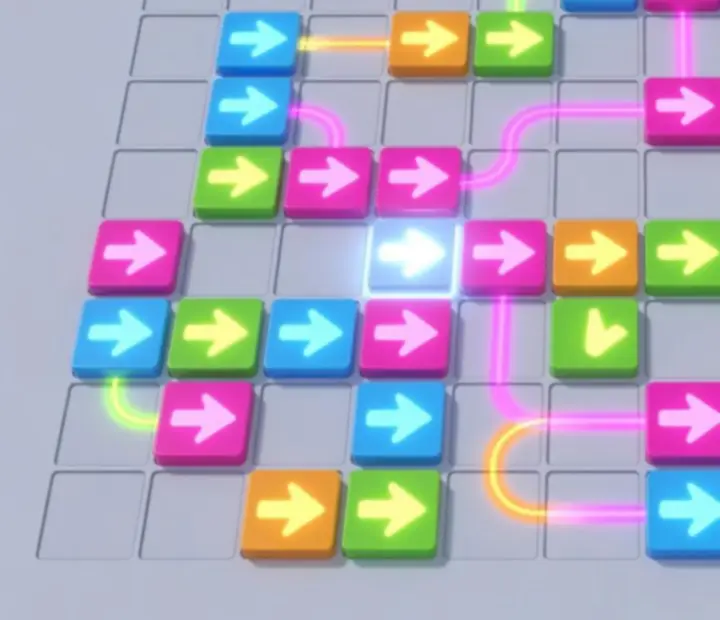
Player carefully studying an Arrow Tap: Escape Puzzle board before tapping
Take a moment to inspect directions, blockers, and exits before your first tap.

Core Strategy Pillars

These principles apply to almost every Arrow Tap: Escape Puzzle board, from your first levels to the most intricate layouts.

Recognize Blocked Arrows Instantly

Blocked arrows are those that would collide with another arrow, the board edge, or a visible obstacle if you tapped them. Learning to identify these at a glance helps you avoid taps that lead nowhere.

  • Check the space in front of each arrow: is it open or plugged?
  • Note arrows pointing directly into a neighbor or the edge of the grid.
  • Mark “locked” arrows in your mind as future moves that depend on earlier clears.

Over time, your eyes will automatically filter the board into playable arrows and blocked ones, speeding up decision-making.

Plan for Move Sequencing

In Arrow Tap: Escape Puzzle, the solution rarely comes from a single clever tap. Instead, success depends on chaining taps in a sequence that continuously opens new paths.

  • Think 2–3 taps ahead: before you tap, ask what will be safely playable next.
  • Unlock future paths: choose arrows that free blocked arrows in later rows or columns.
  • Preserve flexibility: avoid moves that leave only one risky option remaining.

When you plan sequences, boards feel less like trial-and-error and more like solving a layered logic pattern.

Learn from Failed Attempts

Getting stuck is part of the experience. Each failed run is a chance to understand how the arrow network really works.

  • After a reset, replay the board mentally and pinpoint the move that trapped you.
  • Ask which arrows you should have left for later as escape routes.
  • Experiment deliberately: try one new starting move each attempt and compare results.

This reflective approach keeps the game relaxing: you’re exploring patterns, not punishing yourself for mistakes.
Avoiding Dead Ends and Traps

Nothing feels worse than clearing most of a board only to strand a single arrow behind an unbreakable wall. These techniques keep your options open.

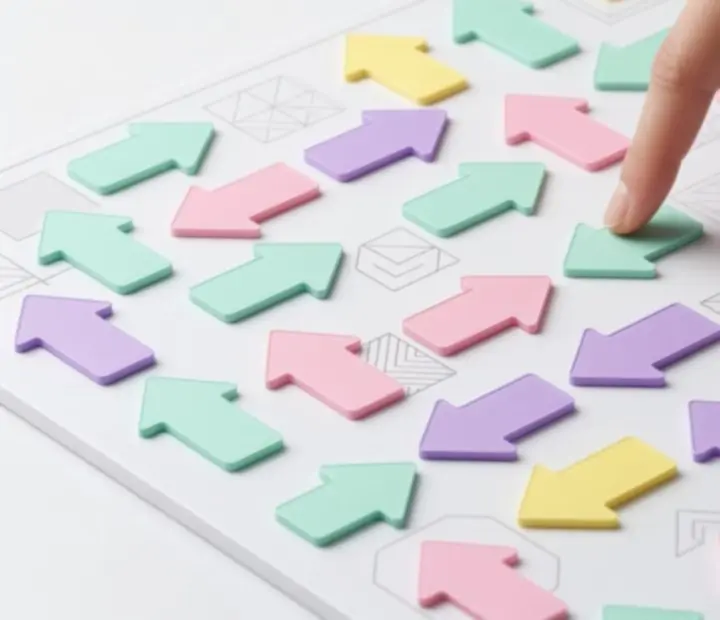
Illustration of arrows arranged to avoid dead-end paths
Plan your route so remaining arrows always have at least one open exit.

Avoid Creating Dead Ends

A dead end happens when the arrows you have left can no longer travel in their pointing direction because paths are sealed off. The key is to think about what your current move does to the future layout.

  • Preserve gateways: do not clear the only arrow that lets others escape a crowded region.
  • Watch for back walls: arrows pressed against the board edge with no open path will stay stuck.
  • Prioritize risky zones: clear congested clusters early before they become impossible to untangle.
  • Leave safety arrows: keep at least one arrow in each area that can create space later.

If you notice you’re often one move away from victory, your next step is to identify which earlier tap sealed the board and invert that choice.

Position, Chains, and Board Flow

Good positioning makes your clears feel smooth and rhythmic, turning each level into a flowing logic path.

Use Corners and Edges Strategically

Corners and edges often hide your safest early moves. They have fewer neighboring arrows, which makes their behavior easier to predict.

  • Scan all four corners right after loading a board; look for clean exits.
  • Check edge arrows pointing off the board; they’re often free, low-risk clears.
  • Use edges to peel back layers of arrows, opening the center step by step.

Starting from the outside and working inward can give you the breathing room you need for trickier central arrangements.

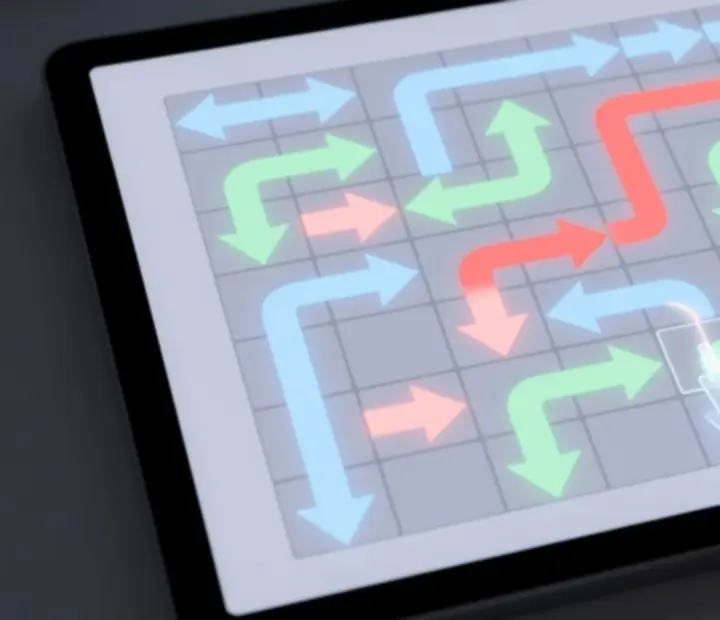
Sequence of arrow clears forming a satisfying combo
Look for arrows that unlock immediate follow-up moves to form satisfying chains.

Look for Chains and Combos

Some of the most satisfying turns happen when a single tap unlocks a cascade of obvious, unobstructed moves.

  • Identify pivot arrows: one tap that removes a central blocker can open multiple new paths.
  • Group directions: watch for lines of arrows pointing in the same direction that can be cleared in quick succession.
  • Preserve combos: avoid tapping a piece that would split a potential chain into awkward fragments.

Chasing chains is not just efficient—it reinforces the relaxing, rhythmic feel of Arrow Tap: Escape Puzzle as you sweep through the board.

Mindset for Relaxed, High-Level Play

Advanced boards introduce denser layouts and more subtle traps, but the right mindset keeps them enjoyable rather than overwhelming.

Stay Calm Under Pressure

When a layout looks intimidating, it is tempting to tap quickly and hope the pattern reveals itself. This usually creates chaos instead of clarity.

  • If you feel stuck, pause for a few breaths or take a short break.
  • On returning, re-scan the board as if it were new; fresh eyes notice paths you missed.
  • Focus on one small region at a time instead of solving everything at once.

This patient approach preserves the game’s role as a relaxing logic escape rather than a stressful challenge.

Mastering Advanced Boards

Harder layouts introduce arrows that only become viable after multiple supporting moves. You will often need to explore less obvious ideas.

  • Test unusual starters: instead of always beginning with the clearest arrow, try alternative openings and compare outcomes.
  • Track critical arrows: notice which pieces repeatedly cause dead ends and plan around them earlier.
  • Experiment with routes: if a familiar pattern fails, invert your usual order or solve from the opposite side.

Advanced boards reward curiosity. Treat each one as a puzzle box to explore, not just a hurdle to clear.

Practice Makes Progress

You are not expected to clear every board on your first attempt. Improvement in Arrow Tap: Escape Puzzle comes from repetition and reflection.

  • Notice how your pattern recognition improves as you see similar shapes of arrows.
  • Challenge yourself to solve a previous level with fewer taps using better planning.
  • Alternate between easier and tougher boards to keep play sessions light and enjoyable.

With time, you will naturally see move sequences faster, making even complex boards feel approachable and satisfying.

Next: Turn Tips into Taps

Ready to apply these ideas? Explore our guides and how-to sections to see these strategies broken down with example boards and step-by-step patterns.

Stay Oriented Across the Site

Arrow Tap: Escape Puzzle is covered from every angle here on Arroway Path Way.