Game Review • Arrow Tap: Escape Puzzle
Arrow Tap: Escape Puzzle — A New Kind of Logic Challenge
Arrow Tap: Escape Puzzle turns simple one-tap inputs into surprisingly deep logic challenges. Every arrow you clear reshapes the board, opening new paths or quietly closing off your best route to the exit.

Gameplay Mechanics: Clearing Arrows, Shaping the Board
At the core of Arrow Tap: Escape Puzzle is a simple rule: tap arrows to clear them and gradually open a path through the board. Each arrow points in a specific direction, suggesting where the flow of the puzzle wants to go. When you remove an arrow, the board does not physically shift, but your available options do. Paths that once looked promising may vanish after a careless tap.
Instead of sliding tiles or matching colours, you are editing the maze itself. You look at the grid, read the arrows, and decide which pieces are actively blocking the safe route and which are quietly supporting your long-term plan. The satisfaction comes from watching the clutter vanish as your chosen path becomes clean, direct, and inevitable.
This arrow-clearing mechanic rewards deliberate thinking. One hasty move can seal off a crucial corridor, forcing you to backtrack mentally and re-evaluate your plan. It is less about speed and more about understanding how every tap rewrites the board’s possibilities.
Every Tap Has Consequences
Because arrows do not respawn, every cleared piece is permanent. That permanence turns even early boards into small logic proofs: if you remove this arrow first, what does it allow later? If you leave that blocker in place for one more move, does it protect a more valuable route?
Over time, players learn to scan for critical arrows—pieces whose removal will immediately unlock or destroy key paths. The more you play, the more natural this assessment becomes, making the mechanic feel both intuitive and surprisingly deep.
Arrow Directions and Pathfinding
Arrow Tap: Escape Puzzle trains you to read direction at a glance. Each arrow tile is a tiny instruction: “The flow wants to move this way.” The goal is not just to follow directions blindly but to recognize which arrows belong to a clean route and which will steer you into a dead end.
You start by identifying entry and exit regions on the board—places where a path should logically begin or end. From there, you trace sequences of arrows: right, up, up, left. Any arrow that breaks this imaginary trail becomes a candidate for removal.
This pathfinding process is where the game feels closest to classic logic puzzles. You are constantly asking yourself: if the path must eventually reach that side of the board, which directions remain valid? When you eliminate arrows that point the wrong way, the correct path often reveals itself with quiet clarity.
Reading the Board Like a Map
- Scan from goal to start: work backward from where you want to end.
- Follow consistent direction chains: sequences that curve smoothly are more likely to be correct.
- Mark impossible arrows mentally: any arrow pointing into a wall of blockers is rarely part of the solution.
As boards grow more complex, this map-reading skill becomes essential. The better you read direction, the fewer experimental taps you need.
Blocked Paths: Challenge and Opportunity
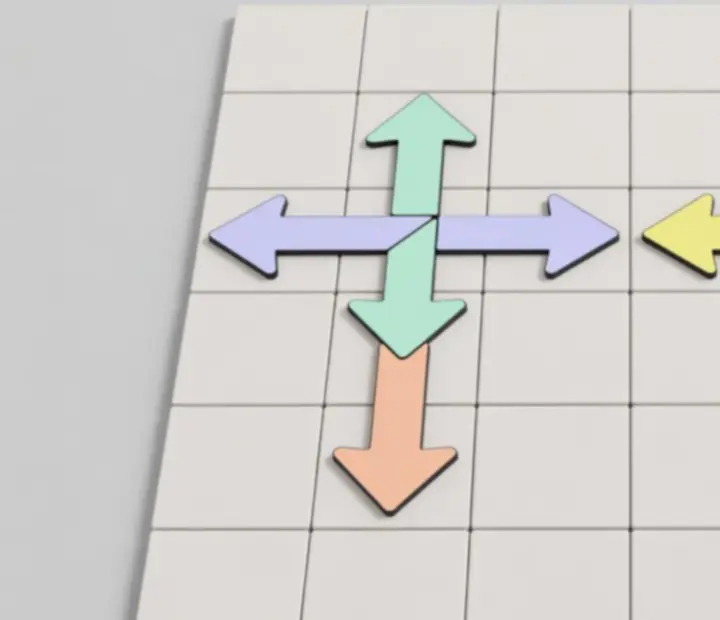
Blocked arrows are the game’s signature twist. These tiles sit in the middle of otherwise promising routes, forcing you to decide whether and when to remove them. A blocked path can look like an obstacle, but it is often the puzzle’s main clue: if something is blocking the most obvious way forward, there is probably a clever workaround hidden nearby.
Some blocked arrows act as gates. Clear them too early and you may reveal an empty corridor that leads nowhere, stranding key tiles behind an irreversible gap. Leave them in place longer, and they may temporarily hold your structure together, guiding you to a more sustainable route.
Over many puzzles, you realize that blocked paths are less about punishment and more about pacing. They encourage you to pause, examine your assumptions, and look for alternate angles that feel unexpectedly smart once you find them.
Move Sequencing and Planning Ahead
Arrow Tap: Escape Puzzle shines brightest when you treat each board as a planning exercise. The question is never simply which arrow to tap, but when to tap it. Order matters: clear a supporting arrow too early and you cut off a future connection; wait too long and you may trap yourself behind your own moves.
Successful players develop a lightweight mental checklist: secure the main path, protect essential junctions, and only then clean up stray arrows. This emphasis on sequencing makes the game feel like a calm, discrete version of route optimization—no timers, no pressure, just thoughtful refinement of your plan.
Planning ahead does not require heavy math. Instead, you trace two or three moves into the future, testing hypothetical chains in your head: “if I remove this, then that, will the path still exist?” Within a few levels, this future-thinking becomes second nature.
Sequencing Strategies
- Lock in the spine: identify a central route that connects start and finish, and protect it.
- Delay risky taps: avoid removing arrows that support multiple potential routes until you are sure you no longer need them.
- Trim from the outside: clear obvious dead-end arrows at the edges before altering the core of the board.
These habits help you avoid self-created traps and keep your options open longer, especially on intricate boards.
Increasing Difficulty Curve
Arrow Tap: Escape Puzzle starts gently. Early boards use only a handful of arrows with mostly obvious directions, giving you room to absorb the basic relationships between tiles. You can clear these beginner puzzles almost on instinct, which builds quick confidence.
As you progress, the game quietly adds complexity: more arrows per board, more intersections, and more instances where multiple routes appear equally plausible. Blocked paths overlap, fork, and recombine. The number of “safe” first moves shrinks, encouraging real analysis instead of casual tapping.
What makes the curve feel fair is how each new board type reuses skills you have already learned. A trick you discovered on a smaller grid—like preserving a central junction until the very end—returns in a denser puzzle, scaled up but still familiar. The result is a difficulty curve that feels earned, not abrupt.
From Beginner to Challenging
Rather than labelling rigid level numbers, the experience naturally segments into tiers:
This gradual climb keeps the game approachable while still offering depth for players who enjoy serious logic challenges.
Puzzle Design Excellence
The best puzzle games are those where the solution feels inevitable in hindsight, and Arrow Tap: Escape Puzzle often hits that mark. Board layouts tend to avoid pure trial-and-error in favour of patterns you can logically decode: mirrored arrows, symmetrical blocks, or subtle direction chains that guide you from one corner to another.
The visual design supports this logic-first approach. Arrows are large, clean, and colour-coded in a way that feels playful but not distracting. Blocked paths stand out just enough to invite inspection without overwhelming the grid. Nothing is purely decorative; every icon and colour choice has a role in readability.
Logic, Intuition, and Experimentation
Each well-crafted board balances three modes of thinking:
- Logic: deducing which arrows must be part of the solution.
- Intuition: sensing that a particular route feels “too noisy” or inefficient.
- Experimentation: testing a small sequence to confirm or disprove a hypothesis.
This mix creates a satisfying rhythm. You think, you try, you adjust. The game rewards clear reasoning without punishing moments of curiosity.

Relaxation in Gameplay
Despite its logical depth, Arrow Tap: Escape Puzzle is built for relaxation. There are no tight timers, no frantic combo counters, and no demanding reflex tests. You are free to study the board at your own pace, make considered moves, and enjoy the satisfaction of a cleanly cleared grid.
The visual presentation leans into this calm atmosphere. Soft pastel tones, rounded shapes, and subtle gradients make each board feel like a small, contained workspace rather than a hectic battleground. Clearing animations are smooth and restrained—enough to feel rewarding, never enough to be distracting.
Paired with one-tap controls, the result is a game that fits perfectly into quiet pockets of the day. You can play while commuting, between tasks, or during a short break, and step away without feeling the pressure to grind or chase streaks.
Short Sessions, Long Satisfaction
Individual puzzles in Arrow Tap: Escape Puzzle are designed to be compact. Even later boards rarely feel sprawling; instead, they pack complexity into tidy grids that can be solved in just a few focused minutes. This short-form structure makes the game easy to dip into without committing to long play sessions.
What lingers is the mental satisfaction. Solving a tricky arrangement after a brief moment of insight feels surprisingly substantial for such a small interaction. You get a clear sense of progress without needing long levels, elaborate cutscenes, or heavy narrative framing.
Because there is no strict time pressure, mistakes are low-stress. A mis-tap becomes an invitation to re-evaluate the board, not a reason to panic. This makes Arrow Tap: Escape Puzzle especially suited to players who enjoy being challenged but prefer a calm, forgiving environment.
Perfect for Micro-Breaks
Arrow Tap: Escape Puzzle excels as a “micro-break” companion. In a few minutes you can:
- Scan a fresh board and identify key arrows.
- Test a short move sequence.
- Enjoy the payoff of clearing the final blocker.
The game respects your time while still offering that satisfying click of a solved puzzle.
Accessibility and Interface Highlights
From a usability perspective, Arrow Tap: Escape Puzzle feels tuned for touch screens. Arrows are large and well spaced, reducing accidental taps. The interface keeps on-screen clutter to a minimum so you can focus on the board itself rather than fighting menus or overlays.
Colour choices emphasise clarity: bright arrow hues stand out crisply against soft backgrounds, while blocked paths are visually distinct without becoming harsh. Typography is readable at a glance, supporting quick play on smaller devices.
The one-tap input scheme also lowers the barrier to entry. There are no complex gesture patterns, no rapid swipes, and no invisible zones to memorise. If you can see an arrow, you can interact with it. This makes the game approachable for a wide range of players, including those who simply want a comfortable, low-friction puzzle to unwind with.
Designed for Mobile Comfort
- Large hit areas for tiles, reducing mis-taps.
- Clean layout with minimal visual noise.
- Consistent iconography so every arrow reads clearly.
- Responsive scaling that keeps boards legible across phones and tablets.
Together, these touches help the game feel both polished and welcoming, even in longer play sessions.
Editorial Verdict
Arrow Tap: Escape Puzzle stands out as a logic game that values clarity, calm, and thoughtful design. It proves that you do not need complicated controls or heavy storylines to create a memorable puzzle experience.
Where It Shines
- Accessible mechanics: one-tap controls and intuitive arrows welcome new players quickly.
- Meaningful depth: blocked paths and move sequencing keep experienced puzzlers engaged.
- Relaxing feel: soft visuals and gentle pacing make it ideal for unwinding.
Best For
Arrow Tap: Escape Puzzle is especially well suited to:
- Players who enjoy logical pathfinding and light strategy.
- Busy people looking for short, satisfying puzzle sessions.
- Anyone who prefers calm, non-urgent mobile experiences.
Continue Exploring
Want to go deeper into the game’s systems and strategies?